
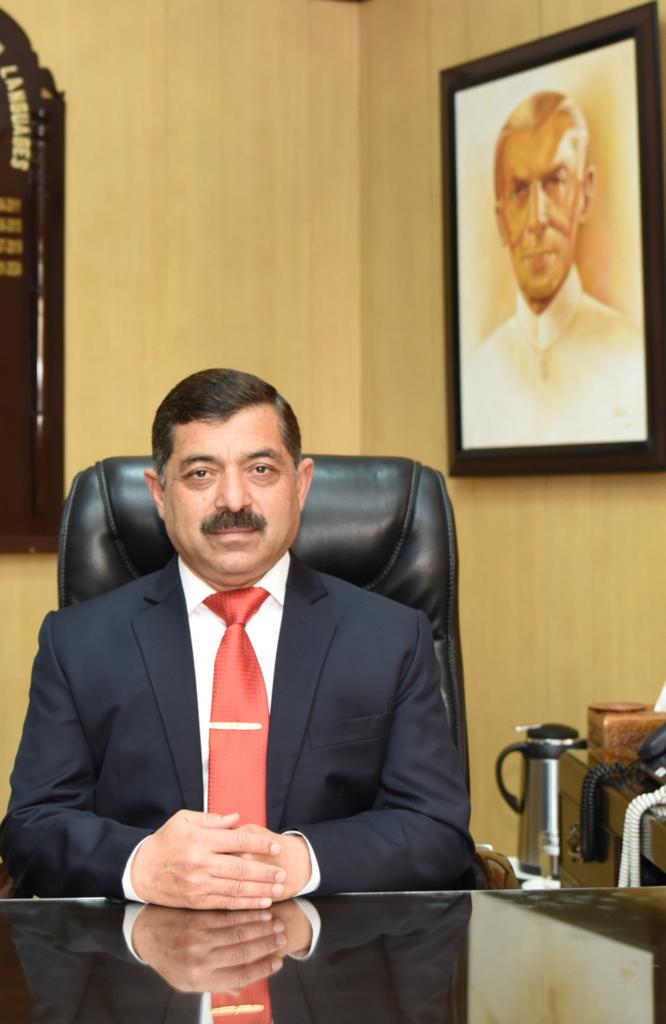





Dr. Hafsah Zahur
- ASSISTANT PROFESSOR
- hzahoor@numl.edu.pk
|
Degree Name |
Passing Year |
University/ Institution/ Board |
|
PhD |
2019 |
International Islamic University, Islamabad |
|
MS/ M.Phil (18 Years) |
2011 |
International Islamic University, Islamabad |
|
Bachelors |
2008 |
International Islamic University, Islamabad |
|
Designation |
University/ Institution/ Organization |
From |
To |
|
Assistant Professor |
NUML |
15/09/2020 |
Till date |
|
Lecturer |
NUML |
01/08/2013 |
14/09/2020 |
| Research Publication(s) e.g. research articles published in national and international journals, conference papers, books |
| 1. Mahmood, S., & Zahur, H. (2026). Daily job crafting as trait expression: Big Five personality activated by emotional demands. Future Business Journal, 12(1), 97. 2. Ghias, W. B., & Zahur, H. (2026). From Shadows to Spotlight: Courageous Followers Shape Leaders Perceptions and Influence Followers’ Job Performance. Journal of Nursing Management, 2026(1), 9927655. 3. Tariq, J., Shahab, H., & Zahur, H. (2026). Talent Management in Organizational Landscape: A Systematic Review of Literature. Policy Journal of Social Science Review, 4(2), 351-369. 4. Amanat, M. H., Swati, D. S., Zahur, H., Ghani, Z., & Qayyum, A. (2025). Investigate the Impact of Work from Home on Employee Performance: A Study of the Moderating Role of Perceived Organisation Support. Inverge Journal of Social Sciences, 4(4), 203-212. https://doi.org/10.63544/ijss.v4i4.190 5. Qayyum, A., Zahur, H., Swati, S., Ghani, Z., & Amanat, M. H. (2025). Effect of AI Integration in HR on Employee Performance with Mediating Role of Employee Engagement. Research Journal for Social Affairs, 3(6), 803-809. 6. Arbab, K., Swati, S., & Zahur, H. (2025). Impact of Hybrid Work on Employees’ Work-Life Balance: The Mediating Role of Artificial Intelligence. Research Journal for Social Affairs, 3(6), 771-779. 7. Ghani, Z., Zahur, H., Swati, S., Amanat, H. M., & Qayyum, A. (2025). Investigate the impact of transformational leadership on employee performance through mediating role of job satisfaction. ACADEMIA International Journal for Social Sciences, 4(4), 1651-1659. https://doi.org/10.63056/ACAD.004.04.1020 8. Abbasi, F. A., Zahur, H., Swati, S., Masood, S. M., & Haider, I. M. (2025). The role of humble leadership in enhancing organizational support: The moderating effect of employee performance. ACADEMIA International Journal for Social Sciences, 4(4), 2185-2193. https://doi.org/10.63056/ACAD.004.04.1058 9. Masood, M. S., Zahur, H., Swati, S., Haider, M. I., & Abbasi, A. F. (2025). Consumer Behavior and Brand Experience: The Mediating Role of Brand Trust and the Moderating Effect of Big Data. Research Journal for Social Affairs, 3(6), 871-876. 10. Haider, M. I., Swati, D. S., Zahur, D. H., Abbasi , A. F., & Masood, M. S. (2025). Reimagining Workplace Fun: Unveiling Its Impact on Employee Engagement, Organizational Support, and Employee Performance. Inverge Journal of Social Sciences, 4(4), 269-280. https://doi.org/10.63544/ijss.v4i4.195 11. Javed, W., Zahur, H., Dilawaiz, Fatima, I., & Barez, A. (2025). Impact of Core Self-evaluation Traits on Social Entrepreneurship Intention: The Mediating Role of Entrepreneurial Attitude and the Moderating Role of Financial Security. ACADEMIA International Journal for Social Sciences, 4(4), 2637-2649. https://doi.org/10.63056/ACAD.004.04.1123 12. Baig, T. A., Razak, Q., Qadeem, S. E. Y., & Zahur, H. (2025). The Psychology of Narrative in Marketing: Brand Communication through Story Telling. Research Journal for Social Affairs, 3(6), 577-589. 13. Fatima, M., Akhtar, N., & Zahur, H. (2025). Paradoxical Leader Behavior and Followers’ Ambidexterity: The Moderating Role of Followers’ Paradox Mindset. Journal of Workplace Behavior, 6(1), 20-40. 14. Sheikh, A., & Zahur, H. (2024). Does Technostress cause Procrastination-The Dark Side of Technology. Foundation University Journal of Business & Economics, 9(2), 244-251. 15. Bibi, A., Al Hassan, S., & Zahur, H. (2024). Organizational dehumanization fuelling opportunistic behaviour: A social exchange perspective. Asian Journal of Social Psychology, 27(4), 528-539. 16. Mahmood, S., Zahur, H., & Al Hassan, S. (2023). Erosion of Employees’ well-being and satisfaction through Exploitative Leadership and Dehumanization. The moderating role of Resilience. Journal of Positive School Psychology, 7(2), 235-247. 17. Zahur, H., Fatima, T., & Shahab, H. (2019). Machiavellianism and Bullying Behavior: Conditional Effects of Trait Activating Job Roles and Mediating Mechanism of Impression Management: A Region based Study, Global Regional Review, 4(3), 265-276, September, 2019. 18. Rashid, S., Shahab, H., Zahur, H., & Akhtar, C. S. (2021). The power “WE”: Effects of team member exchange on team commitment in Higher Educational Institutes of Pakistan, International Journal of Management (IJM), 12(6), 279-288. 19. Shahab, H., Zahur, H., Akhtar, N., & Rashid, S. (2021). Characteristics of Ethical Leadership: Themes Identification through Convergent Parallel Mixed Method Design, Frontiers in Psychology, 12, 787-796. 20. Ghufran Ali Khan, H., Anwar Khan, M., Iftikhar Ali, M., Salem, S., Rashid, S., & Zahur, H. (2022). Does authentic leadership influences performance of individuals in presence of trust and leader member exchange: An evidence from health care sector. Cogent Business & Management, 9(1), 2119539. DOI: 10.1080/23311975.2022.2119539 21. Ghias, W. B., Zahur, H., & Sabra, M. (2021). Mapping Followership Research: Bibliometric Analysis (2000-2021). Webology, 18(5), 2552-2571. 22. Zahur, H., Ali, M. I., & Gul, M. (2022). The Role of Knowledge-Oriented Leadership and Team Creativity in ERP Project Success. Pakistan Social Sciences Review, 6(2), 721-732. 23. MUJAHID, H., ZAUR, H., AHMAD, S. K., AYUBI, S., & IQBAL, N. (2022). The Relationship between Government Size, Economic Volatility, and Institutional Quality: Empirical Evidence from Open Economies. The Journal of Asian Finance, Economics and Business, 9(5), 19-27. 24. Jabeen, I., Zahur, H., & Jalalzai, N. N. (2023). Impact of Ambidextrous Leadership on Innovative Work Behavior: Mediating Role of Individual Ambidexterity. Journal of Development and Social Sciences, 4(1), 102-112. 25. Zahur, H., Swati, S., & Aslam Butt, M. (2022). Attrition of Creativity and Psychological Well-Being by Exploitative Leader: A Moderated Mediation Model. Journal of Workplace Behavior, 3(2), 34-49. Retrieved from https://charisma-jwb.com/index.php/jwb/article/view/145 26. Zahur, H., Ghafoor, W., & Khan, M. A. (2022). Amplifying the Work Engagement and Constructive Voice through the Leader Humility and Organizational Inclusion Climate. Journal of Development and Social Sciences, 3(3), 554-562. 27. Shamim, F., Zahur, H., & Alvi, B. (2022). Effect of Perfectionism on Work Overload: The Moderating Role of Mental Toughness. Annals of Human and Social Sciences, 3(2), 465-473. 28. Zahur, H., Afridi, M., Rahim, A., Qasim, M., & Fatima, A. (2026). Psychosocial Drivers to Ignite Social Entrepreneurial Behaviour: An Extended Model of Theory of Planned Behaviour for Mitigating Aggressive Behaviour among Youth. The Critical Review of Social Sciences Studies, 4(1), 7133-7147. 29. Fatima, M., Aktar, N., & Zahur, H. (2025). Impact of Paradoxical Leader Behavior (PLB) on employees’ in-role and extra-role performance in the hospitality industry: Moderating role of psychological capital. Journal of Management and Research, 12(1), 127-154. https://doi.org/10.29145/jmr.121.05 |
|
Areas of Interest |
|
Human Resource Management, Organization Behavior, Organization Psychology, Leadership and Personality, General Management. |
Education
|
Degree Name |
Passing Year |
University/ Institution/ Board |
|
PhD |
2019 |
International Islamic University, Islamabad |
|
MS/ M.Phil (18 Years) |
2011 |
International Islamic University, Islamabad |
|
Bachelors |
2008 |
International Islamic University, Islamabad |
Experience
|
Designation |
University/ Institution/ Organization |
From |
To |
|
Assistant Professor |
NUML |
15/09/2020 |
Till date |
|
Lecturer |
NUML |
01/08/2013 |
14/09/2020 |
Publication(s)
| Research Publication(s) e.g. research articles published in national and international journals, conference papers, books |
| 1. Mahmood, S., & Zahur, H. (2026). Daily job crafting as trait expression: Big Five personality activated by emotional demands. Future Business Journal, 12(1), 97. 2. Ghias, W. B., & Zahur, H. (2026). From Shadows to Spotlight: Courageous Followers Shape Leaders Perceptions and Influence Followers’ Job Performance. Journal of Nursing Management, 2026(1), 9927655. 3. Tariq, J., Shahab, H., & Zahur, H. (2026). Talent Management in Organizational Landscape: A Systematic Review of Literature. Policy Journal of Social Science Review, 4(2), 351-369. 4. Amanat, M. H., Swati, D. S., Zahur, H., Ghani, Z., & Qayyum, A. (2025). Investigate the Impact of Work from Home on Employee Performance: A Study of the Moderating Role of Perceived Organisation Support. Inverge Journal of Social Sciences, 4(4), 203-212. https://doi.org/10.63544/ijss.v4i4.190 5. Qayyum, A., Zahur, H., Swati, S., Ghani, Z., & Amanat, M. H. (2025). Effect of AI Integration in HR on Employee Performance with Mediating Role of Employee Engagement. Research Journal for Social Affairs, 3(6), 803-809. 6. Arbab, K., Swati, S., & Zahur, H. (2025). Impact of Hybrid Work on Employees’ Work-Life Balance: The Mediating Role of Artificial Intelligence. Research Journal for Social Affairs, 3(6), 771-779. 7. Ghani, Z., Zahur, H., Swati, S., Amanat, H. M., & Qayyum, A. (2025). Investigate the impact of transformational leadership on employee performance through mediating role of job satisfaction. ACADEMIA International Journal for Social Sciences, 4(4), 1651-1659. https://doi.org/10.63056/ACAD.004.04.1020 8. Abbasi, F. A., Zahur, H., Swati, S., Masood, S. M., & Haider, I. M. (2025). The role of humble leadership in enhancing organizational support: The moderating effect of employee performance. ACADEMIA International Journal for Social Sciences, 4(4), 2185-2193. https://doi.org/10.63056/ACAD.004.04.1058 9. Masood, M. S., Zahur, H., Swati, S., Haider, M. I., & Abbasi, A. F. (2025). Consumer Behavior and Brand Experience: The Mediating Role of Brand Trust and the Moderating Effect of Big Data. Research Journal for Social Affairs, 3(6), 871-876. 10. Haider, M. I., Swati, D. S., Zahur, D. H., Abbasi , A. F., & Masood, M. S. (2025). Reimagining Workplace Fun: Unveiling Its Impact on Employee Engagement, Organizational Support, and Employee Performance. Inverge Journal of Social Sciences, 4(4), 269-280. https://doi.org/10.63544/ijss.v4i4.195 11. Javed, W., Zahur, H., Dilawaiz, Fatima, I., & Barez, A. (2025). Impact of Core Self-evaluation Traits on Social Entrepreneurship Intention: The Mediating Role of Entrepreneurial Attitude and the Moderating Role of Financial Security. ACADEMIA International Journal for Social Sciences, 4(4), 2637-2649. https://doi.org/10.63056/ACAD.004.04.1123 12. Baig, T. A., Razak, Q., Qadeem, S. E. Y., & Zahur, H. (2025). The Psychology of Narrative in Marketing: Brand Communication through Story Telling. Research Journal for Social Affairs, 3(6), 577-589. 13. Fatima, M., Akhtar, N., & Zahur, H. (2025). Paradoxical Leader Behavior and Followers’ Ambidexterity: The Moderating Role of Followers’ Paradox Mindset. Journal of Workplace Behavior, 6(1), 20-40. 14. Sheikh, A., & Zahur, H. (2024). Does Technostress cause Procrastination-The Dark Side of Technology. Foundation University Journal of Business & Economics, 9(2), 244-251. 15. Bibi, A., Al Hassan, S., & Zahur, H. (2024). Organizational dehumanization fuelling opportunistic behaviour: A social exchange perspective. Asian Journal of Social Psychology, 27(4), 528-539. 16. Mahmood, S., Zahur, H., & Al Hassan, S. (2023). Erosion of Employees’ well-being and satisfaction through Exploitative Leadership and Dehumanization. The moderating role of Resilience. Journal of Positive School Psychology, 7(2), 235-247. 17. Zahur, H., Fatima, T., & Shahab, H. (2019). Machiavellianism and Bullying Behavior: Conditional Effects of Trait Activating Job Roles and Mediating Mechanism of Impression Management: A Region based Study, Global Regional Review, 4(3), 265-276, September, 2019. 18. Rashid, S., Shahab, H., Zahur, H., & Akhtar, C. S. (2021). The power “WE”: Effects of team member exchange on team commitment in Higher Educational Institutes of Pakistan, International Journal of Management (IJM), 12(6), 279-288. 19. Shahab, H., Zahur, H., Akhtar, N., & Rashid, S. (2021). Characteristics of Ethical Leadership: Themes Identification through Convergent Parallel Mixed Method Design, Frontiers in Psychology, 12, 787-796. 20. Ghufran Ali Khan, H., Anwar Khan, M., Iftikhar Ali, M., Salem, S., Rashid, S., & Zahur, H. (2022). Does authentic leadership influences performance of individuals in presence of trust and leader member exchange: An evidence from health care sector. Cogent Business & Management, 9(1), 2119539. DOI: 10.1080/23311975.2022.2119539 21. Ghias, W. B., Zahur, H., & Sabra, M. (2021). Mapping Followership Research: Bibliometric Analysis (2000-2021). Webology, 18(5), 2552-2571. 22. Zahur, H., Ali, M. I., & Gul, M. (2022). The Role of Knowledge-Oriented Leadership and Team Creativity in ERP Project Success. Pakistan Social Sciences Review, 6(2), 721-732. 23. MUJAHID, H., ZAUR, H., AHMAD, S. K., AYUBI, S., & IQBAL, N. (2022). The Relationship between Government Size, Economic Volatility, and Institutional Quality: Empirical Evidence from Open Economies. The Journal of Asian Finance, Economics and Business, 9(5), 19-27. 24. Jabeen, I., Zahur, H., & Jalalzai, N. N. (2023). Impact of Ambidextrous Leadership on Innovative Work Behavior: Mediating Role of Individual Ambidexterity. Journal of Development and Social Sciences, 4(1), 102-112. 25. Zahur, H., Swati, S., & Aslam Butt, M. (2022). Attrition of Creativity and Psychological Well-Being by Exploitative Leader: A Moderated Mediation Model. Journal of Workplace Behavior, 3(2), 34-49. Retrieved from https://charisma-jwb.com/index.php/jwb/article/view/145 26. Zahur, H., Ghafoor, W., & Khan, M. A. (2022). Amplifying the Work Engagement and Constructive Voice through the Leader Humility and Organizational Inclusion Climate. Journal of Development and Social Sciences, 3(3), 554-562. 27. Shamim, F., Zahur, H., & Alvi, B. (2022). Effect of Perfectionism on Work Overload: The Moderating Role of Mental Toughness. Annals of Human and Social Sciences, 3(2), 465-473. 28. Zahur, H., Afridi, M., Rahim, A., Qasim, M., & Fatima, A. (2026). Psychosocial Drivers to Ignite Social Entrepreneurial Behaviour: An Extended Model of Theory of Planned Behaviour for Mitigating Aggressive Behaviour among Youth. The Critical Review of Social Sciences Studies, 4(1), 7133-7147. 29. Fatima, M., Aktar, N., & Zahur, H. (2025). Impact of Paradoxical Leader Behavior (PLB) on employees’ in-role and extra-role performance in the hospitality industry: Moderating role of psychological capital. Journal of Management and Research, 12(1), 127-154. https://doi.org/10.29145/jmr.121.05 |
Area Of Interest
|
Areas of Interest |
|
Human Resource Management, Organization Behavior, Organization Psychology, Leadership and Personality, General Management. |