The housing markets in developing nations exhibit notable dynamism characterized by volatile returns and remarkably high liquidity. Specifically, Pakistan displays a substantial annual influx of approximately $5.2 billion into its housing market. The current valuation of Pakistan's residential real estate sector stands at an estimated $700 billion, contributing roughly two percent to the nation's total GDP through the combined efforts of real estate and construction sectors. To stimulate real estate activity, the government has initiated policies aimed at tax reduction. Consequently, Pakistan has emerged as the largest real estate market in Asia, boasting an average annual growth rate of approximately 9% (Wahid, Kowalewski, & Mantell, 2022) .
Primarily, the domestic markets within Pakistan are displaying signs of escalating misinvoicing and corruption. The nation ranks unfavorably low on the Global Competitiveness Index, experiencing a downward trend since 2017. Many industries within Pakistan are grappling with technological obsolescence, and the establishment of new businesses is experiencing a declining trajectory (Ali, Khan, & Ahmad, 2020). Despite these challenges, the value of real estate properties continues to ascend. However, the real estate market has faced repercussions due to the imposition of higher taxes on real estate transactions and restrictions on non-filers. The amalgamation of mismanagement and a highly liquid real estate market in Pakistan has engendered incentives and opportunities for under-invoicing. Consequently, under-invoicing has become rampant across various sectors in Pakistan, with trade mis-invoicing surpassing an alarming $92.7 billion over the past two decades. Real estate transactions in Pakistan have been consistently recorded at 50 to 60 percent lower than their actual worth (Wahid, Mantell, & Mumtaz, 2021) . Consequently, Pakistan occupies a lowly position, ranking 73 out of 100 on the Global Real Estate Transparency Index 2020, indicating a conspicuous lack of transparency within the sector.
Furthermore, Pakistan's real estate sector engages in the trading of plot files that remain unregistered with the relevant government institutions and hold no legal validity. These plot files function as a parallel securities within the country, leading to severe breaches of security and exchange commission of Pakistan’s framework. Submitted files bear the name of the holder and are subject to procedural transfers, thereby enabling developers to amass substantial sums through transfer fees. Open files, on the other hand, change hands with ease, and the possessor is regarded as the owner, even in cases of stolen files (Rauf & Weber, 2020; Zain-ul-Abdin, Shahzad, Kaleemullah, & Ahmad, 2019) .
This practice constitutes the most egregious form of parallel securities, providing investors with little more than meager promises. Authorities have thus far failed to address this monetary dysfunction, allowing unrecorded property files to pave the way for overselling. Developers routinely sell more files than are available, such as selling at least 140 percent imaginary files for a piece of land that accommodates only 100 percent plots. These oversold files are subsequently repurchased under the guise of affidavit files. Developers further exploit public funds through deceptive concepts like adjustment, buy-back, and merging. Reselling is yet another phenomenon that perpetuates this illicit business, concealing the true transaction trail (Babar, 2023) .
Thirdly, pervasive culture of subsidized plots has wrought considerable harm upon Pakistan in multiple dimensions. In the 21st century, investment in land continues to dominate Pakistan's economic landscape due to the scarcity-driven high prices, thereby overshadowing other wealth-generating avenues like the stock exchange. Additionally, a large number of capable and talented young individuals opt for civil service and military careers over entrepreneurship and business endeavors, largely enticed by the prospective perks and privileges, with subsidized plots being a top attraction. In essence, the plots and perks culture has become a self-imposed, constricting constraint on Pakistan's wealth creation potential (N. U. Haque & Durr-e-Nayab, 2020) . The mismanagement of public assets, particularly land, has inflicted significant costs on the Pakistani exchequer. The administration of lands and the distribution of subsidized plots have given rise to numerous issues, from the uncontrollable expansion of cities to rent-seeking behavior and substantial wealth inequalities (Wahid, 2023a).
Lastly, it is imperative to address the prevalent issue of unauthorized housing societies that currently dominate the landscape of Islamabad. Out of the 200 housing societies operating within the city, a mere 22 have obtained the requisite legal approvals from the Capital Development Authority (CDA). A startling statistic reveals that approximately 90 percent of the land within zones 2, 4, and 5 remains outside the regulatory purview of the CDA. This disconcerting situation has led to a state of urban disarray (N. ul Haque & Hasan, 2022).
By the 1990s, Islamabad had transformed into a focal point for prime real estate development, attracting the interest of various government organs and departments. An examination of the roster of private housing societies indicates a notable presence of government entities, both civilian and military, engaged in the housing development sector (Kennedy, 1993) . Regrettably, developers have not refrained from exploiting the system, frequently engaging in practices such as overselling plots, maintaining fictitious land ownership records, and failing to meet development deadlines. Consequently, these housing societies often span several decades before reaching full fruition, with the average development period extending to 12 years and, in numerous instances, exceeding two decades (N. ul Haque & Hasan, 2022; Wahid, 2023b).
Over the years, government departments, agencies, and universities have employed the cooperative society legislation to undertake land development endeavors in an ad hoc and disjointed manner. These projects exhibit prolonged gestation periods, thereby shortchanging investors and enabling influential individuals within each organization and country to derive undue benefits.
Furthermore, they have been susceptible to numerous fraudulent activities, yet regrettably, these issues are rarely subjected to in-depth discourse or comprehension. In light of the aforementioned concerns and obstacles, we are pleased to announce the inaugural 2-day International Conference on Real Estate, bearing the theme 'Reshaping the Real Estate Market.' The primary aim of this conference is to diligently pursue the following objectives:-
In light of these pressing issues within the real estate sector and conference objectives, this conference aims to provide a platform for discourse and analysis, offering policy insights and a forward-looking perspective to reshape this market, with a focus on the following themes.
Please note that the conference format (in-person, hybrid, or virtual) will be determined based on prevailing circumstances and global health recommendations at the time of the even We look forward to your active participation in the International Conference on Reshaping Real Estate Market. Join us as we navigate the challenges and opportunities presented by urban sprawl, real estate bubbles, and environmental-economic sustainability, and together, we can shape a more sustainable and resilient future for the real estate industry.
Assistant Professor, Department of Accounting and Finance
National University of Modern Languages (NUML), Islamabad.
abwahid@numl.edu.pk
Senior Research Economist,
Pakistan Institute of Development Economics (PIDE).
ahmedwaqar@pide.org.pk

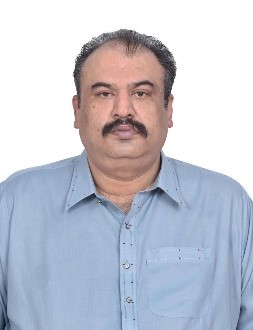
With a Ph.D. in Economics from the University of Chicago, Dr. Nadeem ul Haque is currently the Vice Chancellor of Pakistan Institute of Development Economics, Islamabad. He also served as the Deputy Chairman, Planning Commission of Pakistan from 2010-2013. He has wide ranging operational experience in policy development and economic planning. Apart from his work in Pakistan, Nadeem ul Haque worked for the International Monetary Fund for 24 years. During his long and illustrious affiliation with the IMF, he implemented public structure reform in Sri Lanka and worked in two central banks to organize a modernization effort, which included improvements in the monetary framework and the policy formulation process. Dynamic yet easily approachable, Dr. Nadeem-ul-Haque is also a published author with five books and over fifty articles in various publications to his credit. He has a great vision for the economic sector of Pakistan and wishes to extensively work towards sharpening domestic debate and raising awareness on the local front.

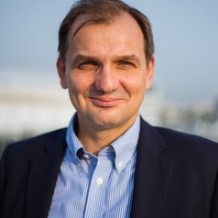
Prof. Oskar Kowalewski, a distinguished academic at IÉSEG School of Management, France, has an extensive background in finance and economics. His education includes a Ph.D. in Economics/Management and a Master of Law from renowned Polish institutions. Prof. Kowalewski's career spans various academic positions, including full professorship and visiting roles in prestigious universities across Europe and the USA. His expertise is further demonstrated through his involvement in multiple research projects and publications in international finance, corporate governance, and fintech. His contributions extend to serving on supervisory boards and participating in numerous international conferences, reflecting a deep commitment to his field.

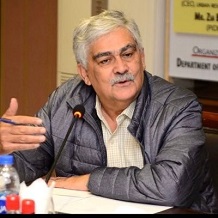
He is a seasoned researcher and academician. He is associated with the College of Business Administration, University of Bahrain, and works as an Associate Professor of Finance. He is also engaged with the School of Social Sciences & Humanities, National University of Sciences and Technology, Islamabad, Pakistan. His research interest includes blue finance, artificial technology, fintech, and blockchain. He has exposure to working in both public and private organizations. Prominently, he was associated with the Board of Investment, Privatization Commission, Ministry of Industries & Production, and Saudi Pak Industrial & Agricultural Investment Company. Earlier, he worked with Quaid-e-Azam University, Bahria University, Foundation University, and the National University of Modern Languages. He also published eight book chapters and participated in different international conferences including the Asian Development Bank Institute (ADBI). Also, he has the exposure to work on projects like Friedrich-Ebert-Stiftung (FES) Asia and the Centre for Excellence for the China-Pakistan Economic Corridor (CPEC).
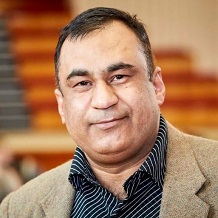
He is an accomplished academic researcher and political analyst with extensive experience in media studies and journalism. Since 1998, he has been a prolific contributor to leading international newspapers, providing insights on economic, cultural, and social issues. Dr. Raja's work spans both written and visual media, focusing on social and cultural issues of ethnic minorities. He has a strong international network and has developed significant working relationships with mainstream academics and professionals. Dr. Raja's educational background includes a Ph.D. in Reporting British Muslims, an MA in International Journalism, and an MBA in Marketing and Advertising. His career is marked by varied teaching roles and extensive publication in peer-reviewed journals, showcasing his expertise in media representation, conflict reporting, and intercultural communication.
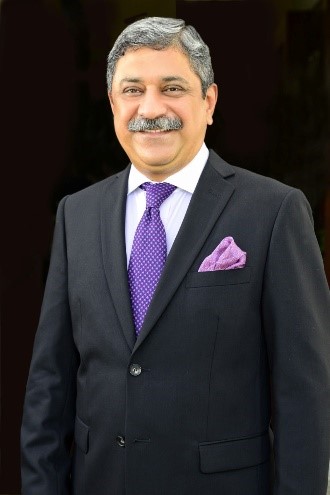
He is the founding chairman of ZLK Securities, a reputable brokerage firm in Pakistan. An alumnus of National Defense University with certifications in capital markets, he began his investment career in 1990 and founded his firm in 1994. Mr. Khan holds significant roles, including Chairman of ISE Tower REIT Management Company Ltd, and has been instrumental in consolidating Karachi, Lahore, and Islamabad stock exchanges into the Pakistan Stock Exchange. His expertise in capital markets has led to prestigious positions, such as Honorary Coordinator to the Federal Tax Ombudsman and Chairman of the Asian Institute of Eco-civilization Research and Development. His efforts focus on financial literacy and fostering economic ties, both regionally and internationally.

He is a prominent figure in the real estate sector, registered with DHA across multiple cities in Pakistan and the Housing Directorate GHQ Rawalpindi. Actively engaged in the sector, he contributes as an analyst on TV talk shows, focusing on economic conditions and real estate trends. He offers consultancy to asset management firms and real estate developers. Ahsan has played a key role in the clearance of Pakistan from FATF's grey-list through his involvement in the construction and property sector. His expertise includes market research, financial analysis for property transactions, and providing market performance assessments. His achievements include roles in the Federation of Realtors Pakistan and the Real Estate Consultants Association, along with recognition from various DHA branches

Interested authors are invited to submit extended abstracts or full papers that present original research, theoretical perspectives, or practical insights related to the conference theme. Submissions should be in English and adhere to the specified formatting guidelines.
All submissions will undergo a rigorous peer-review process to ensure the highest quality of accepted papers. Accepted papers will be presented at the conference and published in the conference proceedings. Interested authors are invited to submit extended abstracts or full papers at: reifs-submission@numl.edu.pk
Accepted papers will be presented at the conference and published in: International Journal of Real Estate Studies (INTREST)